


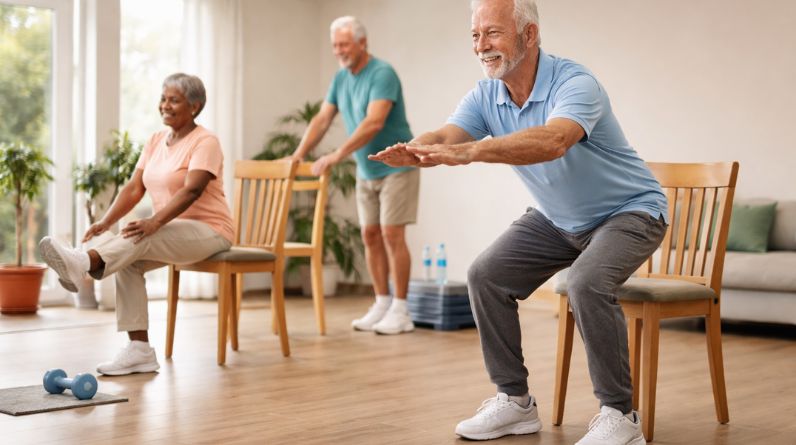
I once saw my uncle hold the stair rail with care. His legs felt weak. That moment led me to learn about exercises for seniors to strengthen legs and how small moves can bring strength back.
Simple senior leg exercises like chair squats and calf raises can boost balance and ease daily movement. In this guide, I share easy leg strengthening exercises for seniors that help build strong and steady legs.
Why Strong Legs Matter More As We Age
My Personal Observation Helping Older Family Members Stay Active
A few years ago, I noticed an older relative move slowly across the living room. Standing from a chair took effort. Stairs felt like a small mountain. That moment showed a simple truth. Leg strength shapes daily freedom.
We started gentle senior leg exercises at home. Chair squats and light raises became part of the day. Balance grew steady again. Walking across the yard looked smooth and calm.
Strong legs support the body like the base of a house. A strong base keeps every part stable. The same idea applies to aging bodies. Steady legs help older adults stay active and confident.
Key Benefits of Strong Leg Muscles for Seniors
Strong leg muscles bring better balance. Falls become less common. Stability improves during simple tasks like standing or turning.
Walking also becomes easier. Steps feel lighter. Climbing stairs feels less tiring and more natural.
Daily life gains freedom through strong legs. Older adults move around the home with more comfort. Simple actions like cooking or gardening stay possible.
Leg strength also protects the knees and hips. Muscles act like natural support around joints. This support reduces stress on bones and improves long term mobility.
What Happens When Leg Muscles Become Weak
Weak leg muscles change the way the body moves. Standing up becomes slow. Walking speed drops. Even short distances may feel tiring.
Balance often becomes unstable. The body loses some control during movement. Small slips can turn into serious falls.
Joint stress also increases. Knees and hips carry more pressure without strong muscle support. Over time this strain can limit independence and daily comfort.
Safety Tips Before Starting Senior Leg Exercises
Simple Warm-Up Routine I Always Recommend
A gentle warm-up prepares the body for movement. Muscles loosen and joints move more freely. This simple step lowers injury risk.
Light marching in place works well as a start. The motion wakes up the legs and improves blood flow.
Ankle circles add smooth joint movement. Slow seated stretches relax tight muscles. A warm body moves with greater control and comfort.
Safety Tips for Beginners
Slow and steady movement builds safe progress. The body adapts best through calm and controlled motion.
A chair or wall offers useful support. Balance stays stable during each movement. This support builds confidence during early sessions.
Pain signals the body to pause. Exercise should feel active yet comfortable. Gentle effort supports long term strength and safety.
leg stability often improves with better core support. gentle routines like strengthen your core with a bad back can help build balance and protect the lower body during daily movement
When Seniors Should Consult a Doctor
Some health situations require guidance before starting exercise. Severe joint pain may need medical advice first.
Recent surgery also calls for caution. The body may still recover and require special care.
Balance disorders may also affect exercise safety. A doctor or therapist can suggest safe movement options.
Best Exercises for Seniors to Strengthen Legs
Chair Squats
Chair squats offer a safe way to build leg strength. The chair acts as a guide and support.
Sit on the edge of a chair with feet flat on the floor. Slowly stand up while keeping the back straight. Lower the body back toward the chair with control.
This movement strengthens the thighs and hips. It also improves the ability to stand from a seated position.
Seated Leg Raises
Seated leg raises support gentle muscle activation. This exercise works well for beginners.
Sit upright in a sturdy chair. Extend one leg forward until it feels straight. Hold the position for a few seconds, then lower the leg slowly.
The motion strengthens the front thigh muscles. These muscles help support the knees during walking and standing.
Calf Raises
Calf raises build strength in the lower legs. Strong calves improve walking stability and balance.
Stand behind a chair for support. Slowly lift the heels off the ground. Hold the raised position briefly before lowering the heels.
This movement trains muscles that control push-off during walking. Strong calves make steps feel smoother and more stable.
Step-Ups on a Low Platform
Step-ups help train balance and coordination. A small step or sturdy platform works well.
Place one foot on the platform and push upward. Bring the other foot up to meet it. Step down slowly and repeat the motion.
This exercise strengthens thighs and hips. It also improves stair climbing ability.
Supported Lunges
Supported lunges improve leg flexibility and strength. A chair or wall helps maintain balance.
Step one foot forward while keeping the back straight. Bend the front knee gently while lowering the body slightly.
Return to the starting position with control. The movement strengthens thighs and hips while improving joint mobility.
My Simple Weekly Routine for Senior Leg Strength
A gentle routine supports steady progress. Three sessions per week provide a good starting point.
Day one begins with chair squats and seated leg lifts. Calf raises follow as the final movement. Each exercise trains a different muscle group.
Eight to ten repetitions per movement work well for beginners. Two sets provide enough activity without excess strain.
Progress grows slowly over time. Additional repetitions or extra sets can be added gradually. Consistent practice builds stronger legs and better balance.
Common Mistakes Seniors Make During Leg Exercises
Doing Too Many Repetitions Too Soon
Many people try to push too hard at the start. Muscles need time to adapt.
A slow increase in repetitions protects joints and muscles. Steady progress produces safer long term strength.
Skipping Warm-Ups
Warm muscles move more safely. Skipping warm-ups leaves joints stiff and tight.
Simple warm movements prepare the body for exercise. This small habit improves comfort and safety.
Poor Balance Support
Balance support helps maintain control during movement. Lack of support may lead to slips.
Chairs, walls, or railings offer stable assistance. These supports create confidence during exercise sessions.
How Long It Takes to See Stronger Legs
Muscles adapt through repeated effort. Strength begins to improve after several weeks of consistent exercise.
Small changes often appear first. Walking may feel smoother. Standing up may require less effort.
Balance also improves gradually. Stronger muscles help the body stay steady during movement. Regular activity creates long term strength and mobility.
Extra Daily Habits That Naturally Strengthen Leg Muscles
Walking Routine
Daily walking activates many leg muscles. Even short walks support strength and circulation.
A calm pace works well for older adults. Regular movement builds endurance and joint mobility.
Light Stretching
Stretching keeps muscles flexible. Flexible muscles support smoother movement.
Gentle stretches reduce stiffness in the legs and hips. Daily practice supports healthy mobility.
Staying Physically Active at Home
Simple home activities also strengthen the legs. Light housework and gardening keep the body moving.
Standing, reaching, and walking around the home activate muscles naturally. Small daily actions build lasting strength.
Who Should Avoid Certain Leg Exercises
Severe joint pain may limit some movements. Professional medical advice may help guide safe activity.
Recent surgery also requires caution. Recovery time varies for each person.
Balance disorders may require supervised exercise. A therapist or doctor can recommend suitable routines.
Final Thoughts
Strong legs support freedom of movement. Daily tasks become easier with steady muscle strength.
Simple exercise routines can bring lasting change. Gentle effort builds balance, stability, and confidence.
Consistency remains the most powerful habit. Small steps repeated often create strong and steady legs over time.
FAQs
What are the best exercises for seniors to strengthen legs?
Chair squats, calf raises, and step-ups remain among the most effective options. These movements train major leg muscles and support balance.
How often should seniors do leg strengthening exercises?
Three exercise sessions per week provide a balanced routine. Rest days allow muscles to recover and grow stronger.
Are leg strengthening exercises safe for seniors with knee pain?
Gentle movements with controlled motion usually remain safe. Seated leg raises and chair squats often work well for sensitive knees.
Can seniors strengthen legs at home without equipment?
Many effective exercises require no equipment. Bodyweight movements such as chair squats and calf raises support leg strength safely at home.


