


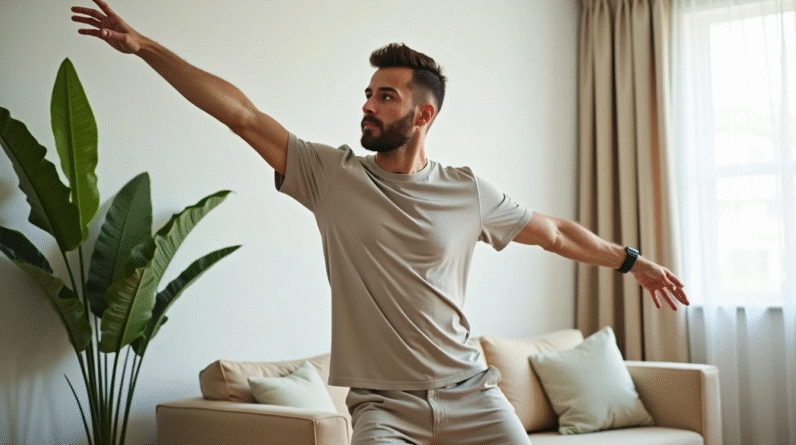
Nobody needs a fancy gym or expensive membership to get stronger. Home can be the perfect place to build muscle and feel your best. In today’s busy world, workouts that fit your schedule and space matter.
At-home strength routines offer real results, right where you are. They help you gain strength, stay consistent, and make progress—all without leaving your living room. It’s simple, it works, and it’s made for anyone who wants more energy, confidence, and power in daily life.
Why At-Home Strength Training Works
At-home strength training delivers powerful results with a flexible approach that fits real life. You don’t need racks of weights or crowded locker rooms to see steady gains in strength and muscle. This style of training is backed by research, enjoyed by millions, and perfect for anyone who wants to build up without the distractions or costs of a gym. Here’s why more people are skipping the commute and working out right where they are.
Ultimate Flexibility for Your Life
Home training works around your schedule, not the other way around. Late meetings? Kids’ bedtime? No problem. You can fit in a session first thing in the morning, during lunch, or after dinner. No waiting for machines, no gym hours to manage. This freedom makes it easier to stay consistent and actually do the workouts that drive results.
- No commute: Use the time you’d spend driving to the gym for more reps or a longer shower.
- Workout anytime: Early riser or night owl, you control when to train.
- Adaptable space: Living room, backyard, bedroom—your workout, your choice.
Real Cost Savings
Skipping a gym membership saves money fast. There are no monthly fees, gas costs, or wear and tear on your car. You can build strength using your own bodyweight or with a few low-cost tools like resistance bands or dumbbells.
Here’s what you avoid when you train at home:
- Monthly gym fees (which add up over time).
- Expensive equipment you barely use.
- Paid personal trainers—many apps and videos are free.
Proven Strength Gains Without a Gym
Science shows that your body responds to resistance, not a location or a specific machine. Push-ups, squats, lunges, and planks give you strength gains equal to many gym exercises. Even a single kettlebell or a pair of dumbbells opens up hundreds of strength moves.
Bodyweight routines and minimal gear do the job:
- Classic movements activate multiple muscles at once.
- Progressive overload (adding reps or resistance) leads to new muscle growth.
- Training at home lets you focus and personalize your session, which gets you better results over time.
Answering Doubts About Effectiveness
Many people worry that home workouts aren’t as “real” as gym sessions. The truth is, effort matters more than location. Studies confirm that consistent, progressive resistance at home can add serious muscle and strength.
You can make home workouts harder:
- Slow down your reps for added challenge.
- Try advanced movements like pistol squats or decline push-ups.
- Use resistance bands, backpack weights, or household items for more intensity.
You’re capable of getting strong outside the gym. The most important thing is showing up, pushing yourself, and tracking your progress.
The Power of Convenience
Life is busy and unpredictable. At-home strength training puts you in control. No missed sessions because of weather, travel, or lineups. Every workout finished is a step closer to your goals, all in the comfort of your space.
- No uncomfortable gym vibes.
- No rushing to beat closing time.
- No forgotten gear—everything you need is within reach.
At-home strength routines aren’t just “good enough”—they work, save you money, and give you back your time. That’s what makes this approach smart, sustainable, and worth sticking to.
Essential Gear for Powerful Home Workouts
When it comes to building strength at home, the right gear can take you from basic to powerhouse. You don’t need fancy machines or oversized racks. Just a handful of simple, budget-friendly tools give your muscles everything they need to grow. Here’s what you’ll want on hand to make every workout count, plus a few household tricks for getting started without extra cost.
Resistance Bands
Resistance bands are a powerhouse for home workouts. They’re affordable, portable, and intensely effective for working all major muscle groups. With a single set, you can train arms, legs, chest, back, and even get creative with mobility work.
- Easy to store: Stash them in a drawer or bag.
- Versatile: Use them for squats, presses, rows, or stretching.
- Adjustable challenge: Use thicker bands for more resistance, or double up for even more.
These bands are a go-to for both beginners and seasoned lifters. If you’re just starting, they can replace most gym machines and help prevent strain with smoother tension.
Dumbbells
A basic pair of dumbbells unlocks a universe of exercises. You can train every muscle group, add weight to push harder, and progress as you grow stronger.
- Choose adjustable or fixed weight: Adjustable dumbbells cost a bit more but take up less space.
- Start light: For most people, 5–20 lb pairs cover most main lifts.
If you don’t own dumbbells yet, try filling milk jugs, water bottles, or even canned food containers as a stand-in. Balanced, heavy backpacks can also work in a pinch for squats and rows.
Exercise Mat
A mat cushions your joints and protects your floor during any type of workout. This is more than a comfort item. It helps you hold planks, crunches, and stretches without slipping or bruising.
- Foam or yoga mat: Both work great for strength moves and stretches.
- Easy to clean: A quick wipe keeps things fresh and safe.
If you’re on a budget, a spare blanket or towel can substitute until you’re ready to upgrade.
Pull-Up Bar
A doorway pull-up bar turns any room into a strength zone for your back, arms, and core. Even if you can’t do a pull-up yet, you can hang bands for assisted moves or core work.
- Doorframe bars: Affordable and easy to install.
- Versatile use: Do pull-ups, chin-ups, hanging leg raises, or use as an anchor for bands.
No pull-up bar? Sturdy tree branches or playground bars in your neighborhood can work. For beginner back moves, try “inverted rows” under a strong table or desk.
Household Alternatives
Building muscle doesn’t have to wait for mall trips or online orders. Everyday items add weight, resistance, and variety to your workout when you need it most.
- Backpack filled with books: Great for squats, lunges, and even presses.
- Water jugs: Handles make them perfect for bicep curls and tricep moves.
- Chairs and stairs: Use for step-ups, dips, and incline push-ups.
It’s less about the gear and more about the challenge you give your body. Start with what’s around you, then add to your toolkit as you get stronger.
Mixing a few key pieces with creative use of what’s already at home means your living room becomes your gym. With the right tools, you’ll find it easier to train hard, stay safe, and hit your strength goals every single week.
Bodyweight Moves That Build Real Strength
You don’t need heavy gym equipment to get strong at home. Bodyweight exercises are some of the most effective moves for building true, functional strength. They use multiple muscles at once, help boost balance, and teach control over your own body. With just your body and a small space, you can train for real power, stability, and muscle growth. Here are four key bodyweight moves you can count on for progress.
Push-Ups and Upper Body Power
Push-ups are a classic for a reason. They work your chest, shoulders, triceps, and even your core. Traditional push-ups build strength and muscle quickly when you practice proper form.
- Keep your hands just wider than shoulder-width.
- Maintain a straight line from your head to your heels.
- Lower your chest until it’s just above the floor, then push back up.
If regular push-ups are too tough, start with your knees on the ground. For more challenge, try decline push-ups (feet elevated) or diamond push-ups (hands close together). Focus on steady, controlled movement—rushing these sacrifices gains and can lead to bad habits.
Why push-ups work:
They teach full-body tension and stability, making your upper body stronger while protecting your shoulders.
Squats and Glute Strength
Squats target your legs and glutes better than almost any other move. They hit your quads, hamstrings, and core, all in one motion.
- Stand with your feet shoulder-width apart.
- Keep your chest up and back straight.
- Lower your hips as if you’re sitting back into a chair.
- Drive through your heels to stand back up.
Squats can be scaled for all levels. Beginners can use a chair for support. For extra challenge, try jumping squats or split squats. The goal is control—not simply dropping down and springing up. Good depth and steady form matter more than speed.
Key tip:
Focus on your knees tracking over your toes and your weight in your heels. If your heels lift, widen your stance or don’t go as low to start.
Planks and Core Endurance
Planks go beyond just abs. They challenge the entire core, including your back, shoulders, and even your legs. You’re building endurance while holding your spine strong.
- Place your elbows under your shoulders and rest on your toes.
- Keep your body in a straight line, avoiding sagging hips or raised rear.
- Hold the position while breathing evenly.
Start with short holds—15 or 20 seconds—and build up over time. You can do knee planks as a beginner, or try side planks and plank reach-outs for more burn. Don’t sacrifice form to hold longer; quality always beats quantity.
Why it matters:
A strong core improves posture, reduces injury risk, and makes every other exercise easier.
Lunges and Lower Body Balance
Lunges train your legs, glutes, and balance all at once. They also help even out muscle imbalances between your right and left sides.
- Step forward with one foot, lowering until both knees are about 90 degrees.
- Keep your torso upright and your front knee above your ankle.
- Push back to the start and switch sides.
Walking lunges, reverse lunges, and lateral lunges all offer different benefits. Beginners can hold onto a wall for support if needed. Add a backpack or hold bottles for extra resistance when you feel ready.
Focus points:
Control every step, and don’t let your front knee drift in or out. Keep your core tight for the best strength gains.
Mix these compound moves into your routine for stronger muscles and better overall fitness, all without leaving home. Progress comes from good form and steady challenge, not fancy equipment.
Simple At-Home Strength Routines to Try Now
You don’t need a full gym setup to get fit and strong at home. Progress starts with routines that match your ability and give you clear steps to follow. Here are three routines you can try right away, no matter where you’re starting or where you want to go.
Beginner Full-Body Circuit
This routine uses basic moves you learned before kindergarten, but with real intention. It’s perfect if you’re just getting back into strength work or trying it for the first time. Focus on strong form and steady effort. You want every rep to build confidence and a little sweat.
Do this circuit 2–3 times per week. Rest 60 seconds between exercises.
- Bodyweight Squats – 12 reps
Stand tall, sit back, and rise up with control. - Incline Push-Ups – 8 reps
Use a sturdy chair or your kitchen counter. Keep your core tight. - Reverse Lunges – 10 reps per leg
Step back, lower your knee slowly, and stand tall to reset. - Glute Bridges – 12 reps
Lie on your back, feet flat, squeeze your glutes as you lift hips. - Plank Hold – 20 seconds
Brace your body in a straight line, elbows under shoulders.
Complete all moves for one round, then rest 2 minutes. Do 2–3 rounds in total. If it feels easy, add a round or bump up the reps.
Intermediate Strength Builder
When basic moves start to feel like warm-ups, it’s time to ramp things up. The following routine adds reps, lowers your rest, and includes tougher exercises that push you further. This mix keeps your muscles working hard and your motivation high.
Perform as a superset: do moves back-to-back, then rest 1 minute. Repeat 3–4 rounds.
- Jump Squats – 10 reps
Stay light on your feet and land softly each time. - Regular Push-Ups – 10–12 reps
Full range of motion. Drop knees only if needed at the end. - Bulgarian Split Squats – 8 reps per leg
Put back foot on a low chair. Lower slow, rise strong. - Chair Dips – 10–12 reps
Hands on chair, feet ahead, bend elbows fully. - Side Plank – 20 seconds per side
Stack your feet and lift hips high.
Push your pace but keep good form. As you gain strength, add a set or increase reps weekly.
Advanced Challenge Routine
If you’re ready for tough moves and full-body power, this routine brings the sweat. Advanced strength at home is all about full-range movement, balance, and explosive power. Some moves use a backpack or household item for extra resistance.
Do each exercise for the listed reps, resting 30 seconds between exercises. Complete 4–5 total rounds.
- Pistol Squats (Assisted or Free) – 5 per leg
Use a chair for support or go unassisted if strong enough. - Decline Push-Ups – 15 reps
Feet elevated on a chair or step, lower chest slow. - Single-Leg Glute Bridge – 12 per leg
Hold top for a second for extra burn. - Pull-Ups or Inverted Rows – 8–10 reps
Use a pull-up bar or sturdy table. - Walking Lunges with Load – 12 steps per leg
Hold backpack or jugs for resistance. - Hollow Hold – 30 seconds
Lie on back, arms and legs lifted, core tight.
Check your form and keep rest short for a true challenge. Track your rounds and aim to progress each week—one more rep, one more set.
Pick the routine that matches your level, grab your gear (or just your body), and get started. Strength is built step by step, no gym required.
Tips for Staying Motivated and Making Progress
Sticking with at-home strength training comes down to mindset and building momentum. Motivation isn’t something you catch once and keep; it takes a little work. Even with the best gear and routines, consistency is key for real gains. Let’s break down how you can stay fired up, measure your results, and keep moving forward—especially when things feel tough.
Set Clear, Simple Goals
Give your workouts a reason. Simple, clear goals make it easier to get started and track success.
- Pick a target, like doing 10 push-ups in a row or holding a two-minute plank.
- Focus on actions you control (how many workouts per week, not just “get stronger”).
- Write your goal down. Seeing it every day can spark action.
Small wins count. Reaching them boosts your drive and proves you’re moving in the right direction.
Track Your Progress
Nothing beats seeing yourself get stronger week by week. Tracking turns effort into results you can see.
- Use a notebook or app to log reps, sets, and routines.
- Snap a quick photo every couple of weeks to check your form and muscle growth.
- Jot down how you feel after each workout.
Look back at your records when progress feels slow. Notice the reps added, weight increased, or longer holds. This proof keeps doubts quiet and spirits high.
Make It Part of Your Routine
Treat your home workout like an unbreakable appointment. Success hinges on making it a habit, not an afterthought.
- Choose set days and times—just like a meeting or coffee break.
- Lay out your gear the night before, so you’re ready to go.
- Use calendar reminders if you tend to put things off.
Consistency builds momentum. Once you stop thinking and start acting, it’s stress-free to fit in even a quick sweat session.
Celebrate Every Win
Don’t wait until you look totally different or smash a huge record. Tiny wins are proof you’re building discipline and strength.
- Reward yourself for finishing each week’s routine. A favorite snack, a relaxing bath, or extra downtime works.
- Share progress with a friend, post a milestone online, or just mark it on your calendar.
- Remind yourself that you showed up. That alone sets you ahead.
Celebrating progress sparks your brain’s reward system, making the next workout easier to start.
Adjust When Progress Stalls
Sometimes progress slows or routines start to feel stale. That doesn’t mean failure—just a sign to shake things up.
Try these simple tweaks if your gains have hit a wall:
- Change your rep counts or sets (add more, slow them down, or do “ladder” sets).
- Switch up exercise order or swap in a new move for variety.
- Increase resistance by adding weight (backpack, bands, etc.).
- Shorten rest intervals to ramp up intensity.
- Focus on form—tighten your technique for better results.
Plateaus happen to everyone. A small tweak re-ignites your engine and keeps muscles guessing.
Find Support and Accountability
You don’t have to go it alone. Getting others involved makes showing up more fun and adds an edge of accountability.
- Team up with a friend for virtual check-ins or challenges.
- Join online groups or post updates on social media.
- Tell someone your goal and ask them to check in on progress.
Knowing someone else is rooting for you makes skipping a session feel less tempting.
Remind Yourself Why You Started
Motivation wavers—so remind yourself why you began. Better energy, strength, confidence, or just keeping up with the kids? Write your “why” somewhere you’ll see it. The best routines are powered by reasons that actually matter to you.
Staying motivated at home isn’t about hype or willpower. It’s daily choices, easy tools, and steady proof that you’re moving forward. Keep your setup simple, track your progress, and celebrate all wins. When motivation runs low, lean on habits, support, and your original reason for lacing up in the first place.
Conclusion
Real strength is not built by fancy memberships or high-priced gear—it’s built by showing up and working hard, day after day. You already have everything you need at home to transform your body and mindset. Pick a routine, start moving, and keep that promise to yourself. Each workout adds to your confidence and health.
Stay consistent, enjoy the wins along the way, and never doubt the power of small steps. Begin today, and let your progress inspire those around you to join in. Thank you for spending your time here—share your journey, and let’s build strength together.


