


Many gardeners search for how to use rooting hormone after a few failed plant cuttings. I remember trying to grow a rose cutting once. The leaves stayed green, yet no roots appeared. That small failure made me curious about tools that help plants grow roots faster.
Plant propagation sounds easy, but many cuttings struggle to form roots. This is where rooting hormone helps. A small dip of root hormone signals the plant to start root growth and improves success.
In this guide, I will share simple steps, personal tips, and beginner mistakes so you can learn how to use rooting hormone and grow stronger plant cuttings at home.
What Is Rooting Hormone?
Rooting hormone helps plant cuttings grow new roots. Gardeners use it during plant propagation to support healthy root growth. The product contains plant growth compounds that signal the stem to start forming roots. This small boost often helps cuttings survive and grow more easily.
The hormone works like a gentle guide for the plant. A cutting already has the power to grow roots, yet the hormone encourages the process to begin sooner. Because of this support, many gardeners see stronger and faster root development.
Rooting hormone also improves success rates. Cuttings develop roots faster and experience less stress. Many gardeners notice better results during plant propagation.
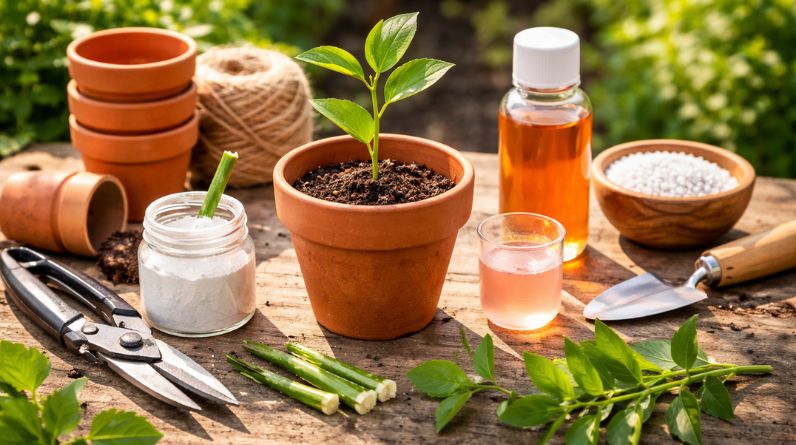
Rooting hormone comes in three main forms. Powder is the most common and easy to use. Liquid spreads evenly across the stem, while gel coats the cutting and stays in place during planting.
Why Gardeners Use Rooting Hormone
Plant propagation feels rewarding. A small stem turns into a new plant with patience and care. Many gardeners rely on a hormone for root growth to improve the chances of success.
One clear benefit is faster root development. The hormone encourages the plant to start forming roots sooner. Faster roots help the cutting absorb water and nutrients more easily.
Another advantage is a stronger root system. Roots created with hormonal support often grow thicker and more stable. A strong root base helps the young plant grow into a healthy mature plant.
Propagation success also improves. Some plants root easily, yet others struggle to form roots. Rooting hormone helps these difficult plants develop roots more reliably.
My early gardening attempts taught me this lesson clearly. Several plant cuttings failed during my first propagation attempts. After trying rooting hormone, the next batch developed roots much more easily. The small difference showed how helpful the right tool can be.
How To Use Rooting Hormone Step By Step
Many beginners search for simple instructions about how to use rooting hormone. The process remains straightforward and requires only a few careful steps.
Step 1 Choose a Healthy Cutting
Start with a healthy plant. Select a strong stem that looks vibrant and firm. A healthy cutting carries more stored energy for new root growth.
Avoid stems that show damage or disease. Weak stems struggle during propagation and often fail before roots form.
Step 2 Prepare the Cutting
Use a clean pair of scissors or pruning shears. Cut the stem just below a node. Nodes contain active plant cells that support new root growth.
Remove extra leaves from the lower part of the stem. Fewer leaves reduce moisture loss and help the cutting focus energy on root development.
Step 3 Apply Rooting Hormone
Dip the cut end of the stem into rooting hormone powder or gel. A light coating works best. Excess hormone offers no extra benefit and may slow growth.
The hormone now signals the stem to begin root formation. This step improves the chances of successful plant propagation.
Step 4 Plant the Cutting
Place the treated cutting into moist soil or a propagation medium. Soil should feel damp rather than soaked. Good drainage protects the cutting from rot.
Press the soil gently around the stem. Firm contact helps the stem remain stable during early root development.
Step 5 Maintain Proper Conditions
Young cuttings need gentle care. Bright indirect light supports healthy growth without stressing the plant. Direct sunlight may dry the cutting too quickly.
Humidity also helps the cutting stay hydrated. Many gardeners place a clear cover over the pot to create a humid environment.
Regular watering keeps the soil slightly moist. Consistent care allows the new roots to develop slowly and naturally.
Using Rooting Hormone for Water Propagation
Many plant lovers enjoy water propagation. A simple glass jar allows roots to grow in clear view. This method feels satisfying because root growth becomes visible.
Can Rooting Hormone Work in Water?
Rooting hormone still works during water propagation. The hormone attaches to the cutting before it enters the water. This early contact encourages the plant to begin root development.
Some gardeners skip the hormone during water propagation. Others prefer to add a light coating to improve root growth.
How To Use Rooting Hormone for Water Propagation
Begin with a fresh cutting. Dip the cut end lightly into rooting hormone. A thin coating provides enough stimulation for root growth.
Place the cutting into a jar of clean water. The stem base should remain underwater while the leaves stay above the surface.
Fresh water supports healthy root development. Changing the water every few days helps prevent bacteria from forming around the cutting.
Natural Rooting Hormone Alternatives
Some gardeners prefer natural methods for plant care. Several household items act as a natural rooting hormone and support root formation.
Common Natural Rooting Hormone Options
Honey serves as a gentle natural option. It protects the cutting from harmful microbes and supports early plant health.
Aloe vera offers another natural solution. Aloe gel contains compounds that support plant growth and root development.
Willow water has long been used in traditional gardening. Willow branches contain natural plant growth substances that encourage root formation.
Cinnamon also appears in many propagation routines. Gardeners use it mainly for its protective properties, which help reduce fungal growth on cuttings.
Plants That Benefit Most From Rooting Hormone
Some plants root quickly with little help. Others need extra support during propagation. Rooting hormone often improves results for these plants.
Roses respond well to hormone treatment. Gardeners often propagate rose cuttings with hormone support to improve success.
Pothos remains one of the easiest houseplants to propagate. Rooting hormone speeds up the process and produces stronger roots.
Hydrangeas also benefit from hormonal support. These plants often develop roots faster with the help of propagation hormone.
Ficus varieties respond well during cutting propagation. The hormone helps the cutting focus energy on root formation.
Succulents sometimes root slowly in certain conditions. Hormonal support encourages stronger root development in these plants.
Common Mistakes When Using Rooting Hormone
Plant propagation feels simple, yet small mistakes can slow root growth. Learning from these errors helps gardeners improve their results.
Using too much hormone remains a common mistake. A thin layer works best. Heavy coating offers no added benefit.
Another issue comes from unhealthy cuttings. Weak stems struggle to produce new roots even with hormonal support.
Poor soil conditions also create problems. Soil that stays too wet may cause rot before roots develop.
Low humidity can slow root growth as well. Young cuttings benefit from slightly humid air during early growth.
One mistake surprised me during my early attempts. A wet cutting touched the hormone container and contaminated the powder. After learning proper technique, my propagation success improved greatly.
Tips for Faster Root Growth
Healthy propagation depends on simple habits. Small adjustments often improve root growth for many plant cuttings.
Fresh cuttings produce the best results. Newly cut stems contain more energy for root formation.
Humidity helps reduce stress on the plant. A light humidity cover supports early root growth and keeps the cutting hydrated.
Indirect light encourages healthy development. Gentle light supports plant energy without drying the cutting.
Soil moisture also plays a key role. Slightly moist soil allows the hormone for root growth to work effectively while protecting the cutting from rot. Healthy lifestyle habits play a big role in hormone balance, and many experts also share helpful wellness insights on natural health and wellness resources
FAQs
Is rooting hormone necessary for plant propagation?
Rooting hormone is not required for every plant. Many easy plants grow roots naturally. The hormone simply increases the success rate for many cuttings.
Can you use too much rooting hormone?
Yes, excess hormone may slow root growth. A light coating works best for healthy propagation.
Does rooting hormone expire?
Most rooting hormone products have a shelf life. Over time the active compounds weaken and lose effectiveness.
What plants do not need rooting hormone?
Plants such as pothos, mint, and spider plants usually root easily. These plants often grow new roots even without hormonal support.
Final Thoughts
Plant propagation offers a rewarding way to grow new plants from simple cuttings. Rooting hormone helps guide the process and supports stronger root development.
Many gardeners see higher success rates after learning how to use rooting hormone correctly. A few careful steps often make a large difference during propagation.
With patience and practice, even beginners can grow healthy new plants. Understanding how to use rooting hormone gives plant lovers a helpful tool for successful gardening.


