


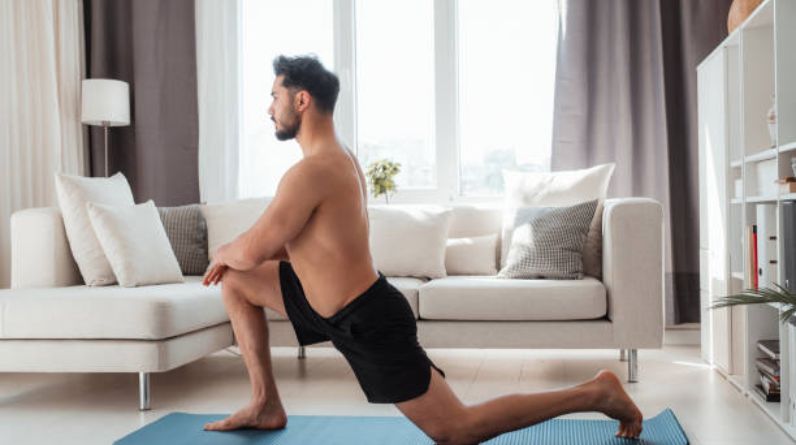
Wondering how to build leg muscle at home without equipment without long gym trips or fancy machines? You can, and you can do it in a small space with just your body weight.
This guide walks you through simple, science-backed steps for stronger legs that look and feel powerful. It is ideal for busy men, beginners, and anyone who does not have access to a gym.
You will get a short, safe, and effective routine you can finish in about 20 to 30 minutes. Follow it with patience and consistency, and your legs will get stronger week by week.
What You Need To Build Leg Muscle At Home Without Equipment
You do not need a squat rack or heavy dumbbells to grow strong legs. What you need is a smart plan, consistent effort, and some space on your floor. Muscle growth comes down to a few simple ideas: challenge, repeat, recover.
Your muscles grow when they handle work they are not used to. This is called progressive overload, but you can think of it as making an exercise a little harder over time. With body weight, you do this by adding more reps, adding more sets, slowing down the movement, or using single-leg versions.
Recovery is the quiet side of training. Your legs grow when you rest, sleep, and eat enough food, not while you are doing squats. Good form keeps your joints safe so you can train often without pain.
How Muscle Growth Works With Just Your Body Weight
Body-weight training builds muscle because your body is still a heavy load. When you bend, push, or hold a position against gravity, your leg muscles work hard.
You want three things in each workout:
- Tension on the muscle. The muscle should feel like it is working, not just moving loosely.
- Enough sets and reps. Stopping when it starts to get hard leaves gains on the table. Aim for the last few reps of each set to feel challenging.
- Harder versions over time. Once a move feels easy, you make it tougher. That can be more reps, slower tempo, deeper range, or a single-leg version.
If you keep increasing the challenge step by step, your legs will grow, even with no extra weights.
Key Basics Before You Start Training Your Legs At Home
A few ground rules make your home leg workouts safer and more effective.
- Warm up for about 5 minutes with light marching, leg swings, or easy squats.
- Focus on slow, controlled reps, not bouncing or rushing.
- You should feel muscles working, not sharp pain in your knees, hips, or lower back.
- Track your reps and sets in a simple notebook or notes app.
- Train your legs 2 to 3 times per week with at least 1 rest day between hard sessions.
Each workout will take about 20 to 30 minutes. That is enough time to hit all the major leg muscles if you stay focused.
Simple Home Leg Workout To Build Muscle Without Equipment
You can build strong legs in your living room with a handful of smart moves. No machines, no gym membership, just your body and maybe a sturdy chair.
Body-Weight Leg Exercises That Hit Every Major Muscle
Here are core exercises that cover every big muscle group in your legs.
- Body-weight squats
Stand with feet shoulder-width apart. Sit your hips back as if you are lowering into a chair, keep your chest up, then stand back up. Squats hit your quads (front thighs), glutes, and a bit of your hamstrings.
- Reverse lunges
Step one foot back, lower until your front knee is around 90 degrees, then push through the front heel to stand. Switch legs. Reverse lunges work quads, glutes, and hamstrings, and they help with balance.
- Step-ups on a chair or step
Place one foot on a stable chair or low step. Push through that foot to stand up on the chair, then step down with control. This targets quads and glutes and mimics climbing stairs with extra effort.
- Glute bridges
Lie on your back with knees bent and feet flat. Squeeze your glutes and lift your hips until your body forms a straight line from shoulders to knees. Bridges focus on glutes and hamstrings, and they support a strong lower back.
- Calf raises
Stand tall, hold a wall or chair for balance, then rise up onto the balls of your feet and lower slowly. This is for your calves, the muscles on the back of your lower legs.
- Wall sits
Slide your back down a wall until your knees are about 90 degrees, as if sitting in an invisible chair. Hold the position. Wall sits hit your quads hard and build mental toughness.
Sample 20-Minute Leg Workout You Can Do In Your Living Room
Use this plug-and-play routine 2 or 3 times per week.
Warm-up (3 to 5 minutes)
- March in place: 1 minute
- Body-weight squats: 2 sets of 10 easy reps
- Leg swings front-to-back while holding a wall: 10 per leg
Main circuit
Do the following exercises in order. Rest 30 to 45 seconds between moves. After one full round, rest 60 seconds, then repeat 2 or 3 rounds total.
- Squats: 12 to 15 reps
- Reverse lunges: 8 to 10 reps per leg
- Step-ups: 10 to 12 reps per leg
- Glute bridges: 12 to 15 reps
- Calf raises: 15 to 20 reps
- Wall sit: hold for 20 to 40 seconds
Focus on these form cues:
- Keep knees in line with toes, not caving inward.
- Keep your chest up on squats and lunges.
- Breathe out as you stand up or push, breathe in as you lower.
If you finish all rounds with solid form and still feel fresh, you can increase reps next time.
Cool-down (3 to 5 minutes)
- Light walking around the room: 1 to 2 minutes
- Gentle quad, hamstring, and calf stretches: 20 to 30 seconds each
Easy And Harder Variations To Keep Your Legs Getting Stronger
Your body adapts fast, so you must keep raising the bar.
To make exercises easier at first:
- Shorten the range of motion, for example, do half squats.
- Hold onto a chair for support on squats and lunges.
- Reduce total reps or time under tension.
To make exercises harder over time:
- Go deeper into each squat or lunge, as long as your joints feel good.
- Slow down the lowering phase to 3 to 4 seconds.
- Pause for 1 to 2 seconds at the bottom of squats or lunges.
- Try single-leg moves like Bulgarian split squats with your back foot on a chair, or start pistol squat progressions using a chair for support.
- Shorten your rest periods by 5 to 10 seconds.
When a workout feels too easy for two sessions in a row, pick one way to increase difficulty. Grow strong legs fast and see more health tips at NaturalHealthSource.com.
How To Progress, Recover, And Stay Consistent With Home Leg Workouts
Muscle growth does not come from a single great workout. It comes from many good workouts done over weeks, plus smart rest and decent daily habits.
Progressive Plan: When To Add Reps, Sets, Or Harder Moves
Use a simple progression plan so you do not stall.
- Learn the form, stay at the low end of the rep ranges.
- Move to the middle or top of the rep ranges on most moves.
- Add one extra set to squats and lunges, or slow your tempo.
- Switch one or two moves to harder versions, such as step-ups to a higher chair or split squats instead of basic lunges.
Any time you can hit the top end of a rep range with clean form, add 2 to 3 reps the next session. If reps are already high, add another set instead, or move to a tougher variation. Keep notes so you can see progress on paper, not just in the mirror.
Recovery, Food, And Habits That Help Your Legs Grow
Your legs need building blocks and rest.
- Take at least 1 full rest day between hard leg days. Light walking is fine and can reduce soreness.
- Aim for 7 to 9 hours of sleep most nights. Growth hormone and recovery peak when you sleep well.
- Eat enough protein each day from sources like eggs, chicken, fish, beans, or Greek yogurt.
- Drink water through the day. Dehydration makes training feel harder and slows recovery.
- Add light stretching or a short walk on rest days to keep blood flowing and stiffness down.
Simple habits like these turn your home workouts into real progress instead of random effort.
Conclusion
You now know that how to build leg muscle at home without equipment comes down to smart training, steady progression, and basic recovery. You can grow strong quads, glutes, hamstrings, and calves using only your body weight and a small space.
Follow the sample workout, track your reps, and increase the challenge little by little. Stay patient for at least 4 weeks and watch how your legs feel stronger in daily life, from climbing stairs to carrying groceries.
Pick a day this week to start the routine, write down your first workout, and commit to showing up for your legs, and for yourself, for the next month.


