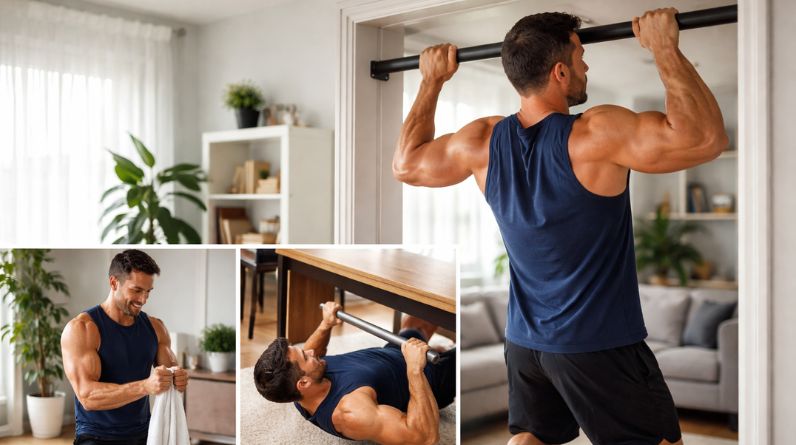
You do not need a gym for strong arms. I once searched for how to workout bicep without weights during a long break from training, and it changed how I see arm growth. Simple bodyweight moves lit my biceps up fast.
Muscle grows from tension, not tools. A smart at home bicep workout with slow reps and tight squeezes can build real strength. In this guide, I will share proven bicep workouts without weights and show how biceps training without equipment fits into a powerful calisthenics bicep workout plan.
Quick Answer – How To Workout Bicep Without Weights
You can train your arms with chin-ups, towel curls, isometric holds, and slow push-ups. Focus on tight form and slow reps. Train two to three times per week. That simple plan builds strength and shape over time.
Bodyweight pulling moves like underhand chin-ups place high tension on the biceps. Towel curls add direct arm work using your own force. Isometric holds keep the muscle under steady strain. Slow tempo push-ups add extra activation and control.
Can You Actually Build Biceps Without Weights?
Yes, you can build biceps without weights through tension and effort. Muscle growth depends on resistance, not metal plates. Your body can create that resistance through leverage and controlled motion.
Science shows muscle responds to mechanical tension. Time under tension plays a big role. Studies suggest 30 to 60 seconds of stress per set supports growth. Slow reps increase that stress even with bodyweight.
Mechanical tension means force inside the muscle. Load is just one way to create that force. Slow eccentrics, pauses, and strong contractions raise internal stress. I saw more arm shape at home once I slowed every rep and focused on control.
Progressive overload still matters. You can add reps, slow the tempo, or use harder variations. I built visible arm lines using strict chin-ups and long holds. The pump felt deep and honest, like the muscle had earned it.
Best At Home Bicep Workout (No Equipment Needed)
A strong at home bicep workout blends pulling, curling, and holding. The goal is steady tension. These bicep workouts without weights build real strength with simple tools.
01. Chin-Ups (Underhand Grip)
Underhand chin-ups shift more load to the biceps. Your palms face you, which increases elbow flexion demand. This creates strong arm activation.
Beginners can start with slow negatives. Jump up to the bar and lower for five seconds. I use 4 sets of 6 to 8 strict reps, with slow control on each descent.
02. Towel Bicep Curls
Stand on a towel and hold both ends. Pull upward while your foot pushes down. This creates self-made resistance.
Keep elbows close to your sides. Curl up for two seconds and lower for four. The slow drop increases time under tension and sparks growth.
03. Inverted Rows (Table Rows)
Lie under a sturdy table and grip the edge. Pull your chest toward the surface. Keep your body straight like a plank.
A closer underhand grip increases bicep load. A wider grip shifts more work to the back. I prefer shoulder-width for balanced tension.
04. Isometric Bicep Hold
Hold a curl position halfway up using a towel or bar. Keep the angle tight and steady. Aim for 20 to 40 seconds.
The burn builds fast. Static tension limits blood flow, which raises muscle stress. That deep shake signals real effort.
05. Close-Grip Push-Ups
Hands placed narrow increase arm involvement. The triceps lead, yet the biceps assist in elbow stability. Slow movement raises tension.
Lower for three seconds and press up with control. That tempo makes the arms work harder. I add these at the end for a strong finish.
Calisthenics Bicep Workout Routine
A calisthenics bicep workout works best with structure. Plan effort and rest with purpose. Consistency drives results.
Beginner Plan:
Choose chin-ups, towel curls, and inverted rows. Perform 3 sets of 10 to 12 reps each. Rest 60 seconds between sets.
Intermediate Plan:
Add slower tempo and pause at the top. Include a 30-second isometric hold at the end. This boosts total tension.
Train arms two to three times weekly. Combine with full body training for balance. Recovery days help muscles repair and grow. To build stronger arms faster, I combine this routine with my Full Body Compound Exercise Routine to train the entire upper body efficiently.
How To Increase Bicep Growth Without Equipment
Biceps training without equipment relies on intensity. Slow eccentrics of three to five seconds increase stress. One-arm variations raise difficulty fast.
Increase total volume over weeks. Add extra sets or longer holds. A backpack filled with books adds load without a gym.
Resistance bands offer optional support. They create smooth tension through the full range. I broke a plateau by slowing every rep and holding the peak contraction longer than usual.
Common Mistakes I Made Training Biceps At Home
High reps without tension stalled my progress. The muscle felt tired, yet growth stayed flat. Quality beats quantity.
Grip position matters. A loose wrist reduces arm activation. I fixed this by keeping wrists firm and elbows steady.
Stopping too far from failure limits growth. Muscles respond to challenge. Once I pushed closer to my limit, results improved.
How Long Does It Take To See Results?
Strength gains often appear in two to four weeks. Visible arm shape may show in six to eight weeks with solid nutrition. Protein intake supports muscle repair.
Sleep also plays a key role. Muscles rebuild during rest. Consistent training plus recovery forms the full picture.
For deeper research on muscle recovery and overall wellness, I also review trusted resources like naturalhealthsource to stay updated with evidence-based insights.
Frequently Asked Questions
Can you grow biceps without weights?
Yes. Growth depends on tension and effort. Bodyweight pulling and slow controlled reps create enough stress for muscle change.
What is the best exercise for biceps at home?
Underhand chin-ups rank highest for direct tension. They combine bodyweight load with strong elbow flexion.
Are push-ups good for biceps?
Push-ups mainly train chest and triceps. The biceps assist in stability. Slow tempo increases that support role.
How often should I train biceps?
Two to three focused sessions each week work well. Rest days allow repair and growth.
Do calisthenics build bigger arms?
Yes. Calisthenics builds strength and size through leverage and tension. Progressive overload still applies.
Final Thoughts
Training arms at home taught me patience. Growth feels slower, yet the strength feels real and earned. Each rep demands focus.
This method works best for beginners and busy adults. It builds a strong base without complex gear. Later, dumbbells can add variety and heavier load.
Your arms are like clay. Steady pressure shapes them over time. Stay consistent, control each rep, and trust the process.